

Three More Zeros: Why I Would Never Take A Check From My Father
How poverty, easy credit, bankruptcy, and prison forged a small and smart mantra that ended my family's economic chaos.

By Mark Whitney
There are two kinds of people in the world. People who have systems, and people who are broke.
My parents had no systems. They never owned a home, a car, a washing machine, or a dishwasher. Our 125-year-old rental had a dirt-floor basement and no running water in the kitchen. For six years, my father lugged water from the bathtub to the kitchen sink to wash dishes.
Why not pivot?
Why not selfishly respect your own time?
Why not learn?
We weren’t poor. We were vintage. We had the world’s first split-level, dirt-floor, BYOW (Bring Your Own Water) kitchen.
My family presented as functional. Dad was a popular high school teacher, a strong-voiced lector at mass. Mom sat in the front row with my siblings. We had all our teeth. I was an altar boy—not for God, but to get paying gigs like weddings and funerals.
Dad worked constantly for extra cash. Coaching and refereeing year-round. Painting houses in warm months. Teaching 15-year-olds to drive in the cold months (which explains the lack of hair and fingernails).
Mom worked full-time nagging Dad. Her questions were not unfair:
“Why don’t we have heat?”
“Why is the car repossessed again?”
“Why are checks bouncing again?”
“Why is the phone disconnected again?”
“When are you going to pay the tab at Kamuda’s? We’re out of food.”
Dad was great at landing paint jobs, terrible at getting paid. He never invoiced customers. When he did, he guessed at hours and failed to document reimbursable expenses. When he was paid, he co-mingled money for supplies with money the family needed for food.
The low point: Dad hired four of my best teenage friends one summer and paid them with bad checks. He was prosecuted, pled guilty to a misdemeanor, and was forced to make restitution under threat of jail.
I can’t say he knew the checks would bounce. I can say he knew his checks had a way of bouncing. The money might be there, but he didn’t know for sure. I remember being 10, watching Dad write a $2 check for gas, thinking: “I would never take a check from my father.”
Shortly after the debacle, Dad claimed he retired from teaching to paint full-time. I suspect he was invited to resign. He never recovered, delivering pizza and teaching driving until he passed peacefully in 2016, a broke and broken man.
At 66, the defining memory of my childhood is the nightly argument about money. My mother picked and picked and picked until eventually my father’s head exploded.
Can we all get some sleep now?
Me? I always had money. At ten, I painted with my dad. By 12, I convinced most of his customers to hire me to mow their lawns. At 14, I had my own mower. I excelled at getting paid. In 1973, I got $3 an hour in seventh grade, more than Dad got to teach seventh grade.
The lawn business, unlike house painting, was a subscription model. Peak season meant payment every four or five days. Fall was like Christmas. Pay me once to cut the grass. Pay me again to rake the leaves.
My invoices were handcrafted, timely, detailed, and accurate.
I didn’t shovel snow. I outsourced it before outsourcing was a thing. Another industrious kid with a snow blower took care of my customers; I paid him 75% in shop class. The customers were mine, not his. I was getting paid to ski.
We had a small ski area a mile away, thanks to a neighbor who married a Vanderbilt girl. He and his wife owned 5,000 acres. Seventy-five bucks for the season! I bought my own new equipment and a season pass. I chipped in on used gear and passes for my brother and sister.
I played bass and could sing a little. At 16, I hid behind a dumpster while my adult bandmates snuck me into the Wobbly Barn, Wobbly II, the Pickle Barrel, and other Killington joints.
This was all good stuff, right? Nobody cared that none of my activity was legal. Everything you’ve read so far was against the law. I was a human crime wave:
I was not 18. I couldn’t contract. But, I was contracting.
I was not drinking age. But, I was in the bar.
Nobody asked or cared if my mowing business was registered with the Vermont Secretary of State. I was not reporting my business income. What’s a 1099?!
As President of the Otter Valley Union High School student council, I hired the band for school dances. They wanted $300. I told them to invoice the student council $400 so they could grease me back a $100 booking fee. I started and ran a school store and put myself on the payroll.
It’s not like Mom and Dad were sending me to school with lunch money.
I didn’t clear this activity through the council, which is an abuse of trust. I promise you, as the current Chairman and co-founder of two corporations with stockholders, I would never—ever—consider such behavior now.
I’m confident Dad never paid a dime of taxes on his business income. He wouldn’t know where to start. Even if he knew the law required, he couldn’t have pulled it off administratively. He was too busy with the important business of lugging dishwater from the bathtub to the kitchen.
Dad’s back office skills were non-existent, and my Mom was, and is, a bloviating, economic ignoramus, who my family has been supporting for over 40 years. And by support, I don’t mean McDonald’s money. We’re talking houses, apartments, and cars.
My first easy credit experience: The local drug kingpin, who laundered weed profits through a guitar and amp shop, trusted me to make payments on gear. I never missed one. When an amp broke, he charged me double: once for his repair, once to repair the repair I did.
To this day, I can’t explain why my parents couldn’t get it together. They found each other, then spent their lives steering clear of each other.
My wife, Julie, and I married at 22 and owned our first home before 25. It was $65,000. Two years later, we bought 10 acres in Norwich, Vermont for $35,000. We clear-cut three acres, got $10,000 for the wood, and built my dream home. I say “my dream home” because Julie never liked the place due to the position of the sun.
“Why you lookin’ at me like that?! I didn’t put the sun there!”
We owed $125,000 on a home appraisers valued at $250,000 ($750K in today’s dollars). We had a one-year-old son and another on the way. Our neighbors were Dartmouth College professors and doctors at Dartmouth Hitchcock Medical Center.
By 30, I was no longer an idiot. I was no longer a goals guy. Goals are for idiots. I’m a systems guy. The right system never lets you fail. A goal can be part of a system. But, goals standing alone are a zero-sum game. Systems are subject to constant refinement.
In my 20s, my #1 goal was financial independence by 35. It’s not that I won’t work. It’s that I won’t have to.
At 27, I walked away from the debt-free, cashflow machine of an advertising agency I started at 22, swapping it for the biggest thing to hit our little state of Vermont.
Ben & Jerry are franchising.
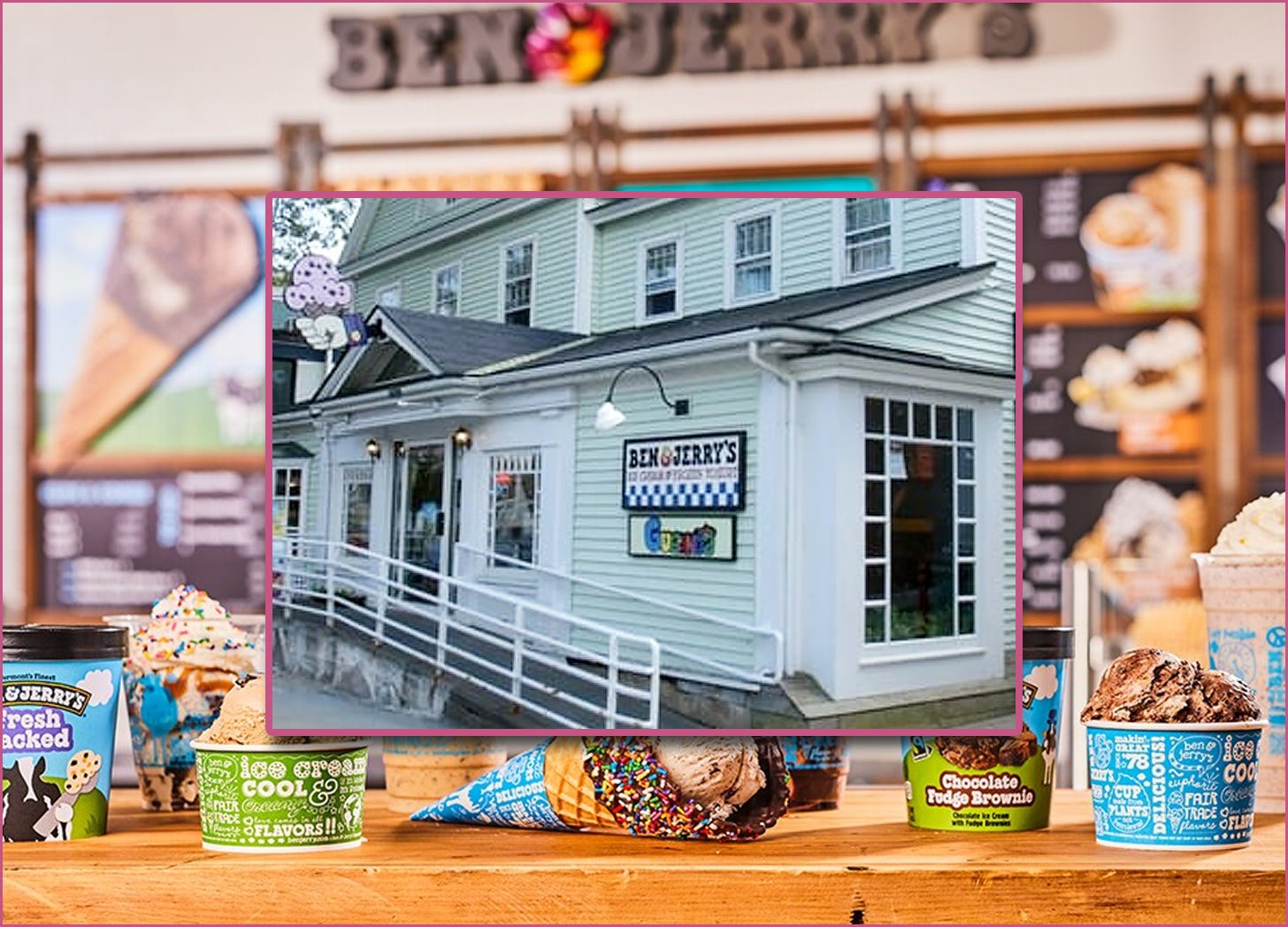
I effectively bought the rights for New Hampshire for $60,000 and built stores everywhere. I had no restaurant experience. No intention of working in the stores. Never negotiated a commercial lease. Never heard the term triple-net.
My advertising business produced television and radio commercials for area banks. If I learned one thing from dozens of marketing meetings with up-and-coming New England bank presidents, it’s that banks sell money.
Banks need your deposits so they can resell a piece of your savings to morons like me.
I wasn’t careful. The banks weren’t careful. They were selling money; I was buying. Needless to say, none of it worked out. Not even a little bit.
There was one, ironic bright spot.
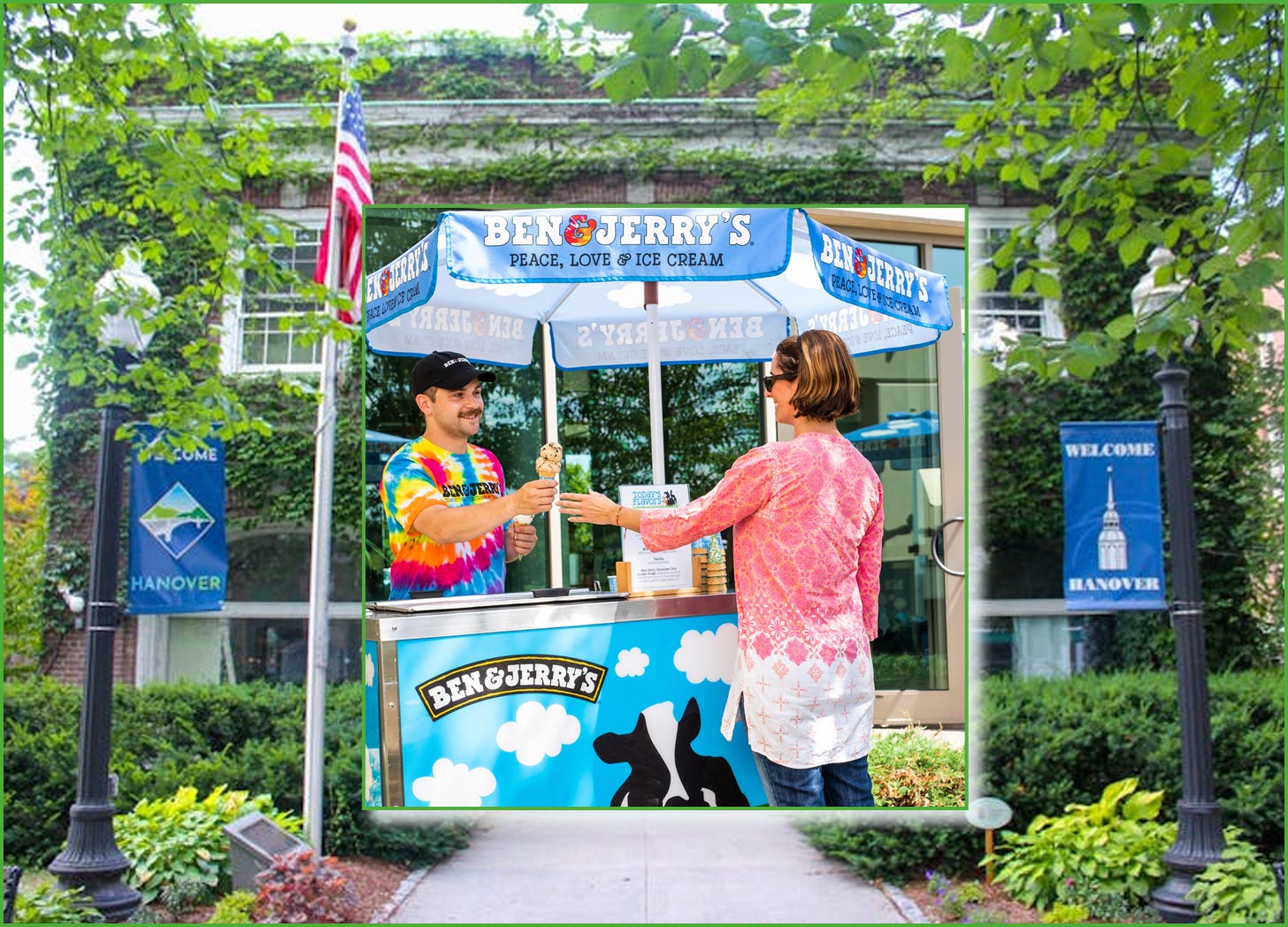
For $7 a day, I got a permit for an ice cream cart in front of the town hall in Hanover, NH. That Small & Smart cart was throwing off $100 an hour in net profit. Meanwhile, the Big & Stupid stores I wasted millions retrofitting and maintaining were hemorrhaging cash.
Cost of goods was 40%, and the bank debt was killing us.
Of the ten small businesses I’ve founded or co-founded, the only one I lost was the Big & Stupid one. Two of the Small & Smart ones have been in business for nearly 30 years.
I grew the Big & Stupid one so fast that by the time I understood the flaws in the business plan, it was too late. Approximately 85% of the first 100 Ben & Jerry’s franchisees went bankrupt. Three of the bankers I did business with were sentenced to multiple-year timeouts for criminal stupidity. On January 10, 1992, I was forced to join them.
Seven hundred days. Five federal prisons. One conjugal visit (that’s from the guy in the next cell).
What my father did with thousands, I did with millions.
Three years before the criminal indignity, my wife and I filed bankruptcy. Everything had to go: Two homes. Sixty acres of land. Seven stores. Three corporations. 120 employees.
The one thing that survived bankruptcy was my close to seven-figure personal debt to the IRS.
On the one hand, we lost everything. On the other hand, we never really had it, did we? We owned nothing outright. It was paper on top of more paper.
Julie, fortunately, has a sense of humor. She never liked that house anyway.
It’s a reliable joke. But the fact is, Julie understood the multiple truths that defined my buffooneries. I’ve known Julie since the sixth grade. We graduated high school the same day. Her family sat through the same masses at the same St. Mary’s.
If you ask, she will tell you that I was a changed man years before the FBI and DOJ showed up.
I was my father with three additional zeros. But I was also the father of two sons. The maladministration of my back office, the unreported income, the unfiled tax returns—that shit no longer runs in the family.
After a jury convicted me on counts of giving the banks tax returns that weren’t quite what they appeared to be, I could have earned points at sentencing by apologizing and accepting responsibility. I refused. These banks aggressively blew money out the door. The more I wanted, the faster they put it in my hot little hands.
The banks and I deserved each other.
As for accepting responsibility, I know my felonious chicanery pre-dates our young family of four. I know this is never happening again, and that’s all that matters.
The new me was a methodical, meticulous, grown-ass systems guy in my 30s. Nose down in the books. Criminal procedure. Civil procedure. Judicial procedure. Administrative procedure. Statutes. Rules. Regulations.
From a prison typewriter, I beat the Department of Justice like a rented mule. What the Government hoped would be 4-1/2 years disassembled into 15 months in, a win on appeal, two years out, five months back in, and three months of home confinement. I served my time on the installment plan, which made all the difference for our family.
Summer of 1993—back on the street pending appeal—my eight-year-old wanted to do a lemonade stand.
What an opportunity to do what my father failed to do: Immerse my sons in applied business administration with money they earned themselves. I built a lemonade stand that looked like Lucy Van Pelt’s Psychiatric Booth from Peanuts®.

“The sign says, ‘Ice Cold Lemonade’ so it has to be ice cold,” I told them. Julie and I taught them:
Buy Low. Sell High.
Stockpile frozen concentrate when it’s on sale for 10 cents a can.
Cost of Goods.
Keep receipts, maintain accurate books, and set aside earnings for the next round of supplies.
Get More Money From Customers You Already Have.
Add homemade, fresh-from-the-oven, still-warm chocolate chip cookies.
Buy In Bulk, Then Unbundle.
Hit local pick-your-own strawberry fields for cheap flats, then break them down into pints and quarts to sell for high cash.
Know Your Worth.
If the lemonade is ice cold, the chocolate chips are still warm and gooey, the strawberries were picked this morning, and you keep regular hours, you can charge the same price as the adults at the general store.
Roll Your Profits Back In Your Business.
Stay debt-free. Maintain unilateral control. No borrowing—not even from Mom or Dad.
Like my lawn mowing business, all of this was completely illegal. Throw in federal and state child labor violations if you want. Doesn’t matter. My sons had regulars who swung by the stand like clockwork.
The chief of police was not only their biggest customer, but also the perfect emblem of how tight-knit communities often appropriately turn a blind eye to the legal niceties that define adulthood.
Now, 41 and 39 respectively, my sons reflect on the lemonade stand as foundational to their entrepreneurial mindset. My youngest dropped out of college to build a Small & Smart eight-figure Amazon store with money he saved working at In-N-Out. At 17, my oldest became the youngest-ever operations manager at AMC Theatre in La Jolla (a restaurant that shows movies). Later, he left corporate America to bootstrap his own eight-figure advertising business from cashflow. His Small & Smart business model is stout and efficient. His company persists while his Big & Stupid competitors are gobbled up by their own hubris.
Neither of them has ever had a car payment. They pay cash. They’ve never paid a dime in credit card interest, and they own their own homes in southern California.
I will never forget the Small & Smart lesson of that ice cream cart, even as I muse daily on the horrendous consequences associated with those Big & Stupid ice cream shops.
Small & Smart is not just the best way to do business. It’s the best way to live.